B2B e-commerce platform selection guide: managing complexity with strategic efficiency
Choosing a B2B e-commerce platform is not a technology purchase but a decision about how the company will manage sales complexity, customer experience and process efficiency. How to evaluate a platform that makes complex selling manageable — self-service, integrations, omnichannel, roles and pricing. Based on McKinsey and Forrester.
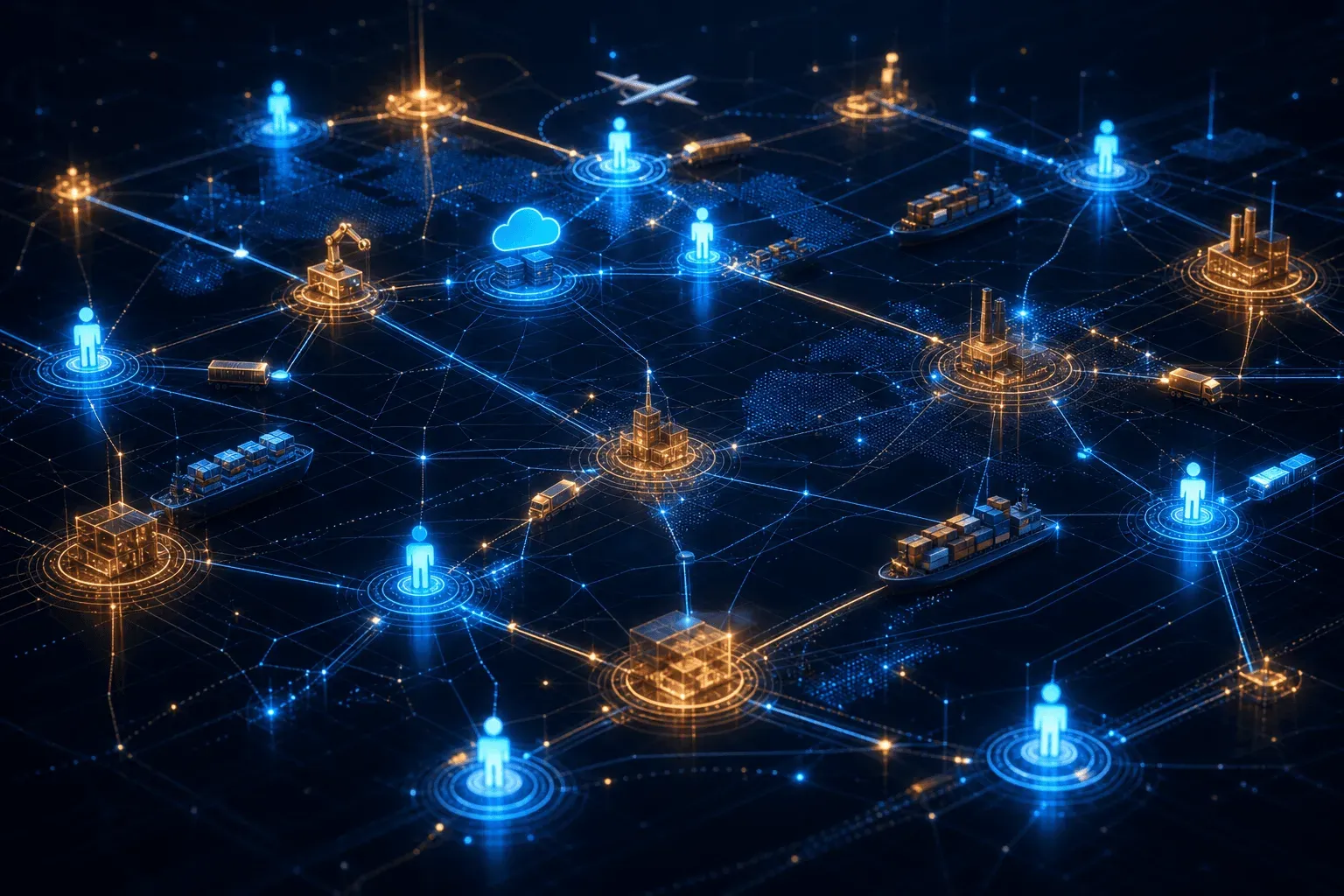
Choosing a B2B e-commerce platform is not simply a technology purchase. It is a decision about how the company will manage the complexity of its sales, its customer experience and the efficiency of its internal processes over the coming years. McKinsey's B2B research clearly indicates that digital and omnichannel sales are no longer an alternative to the traditional B2B model, but increasingly its central revenue channel. Forrester adds that self-service buying has become a permanent part of the B2B purchasing process across all buying stages, not just a side channel for small transactions.
This means platform choice has become a strategic management decision. When a platform handles complexity poorly, manual work, slowness, invisible process costs and customer friction grow. When the platform is chosen correctly, that same complexity becomes manageable, automatable and even, in part, a competitive advantage.
A B2B platform does not solve a simple purchase, but a complex buying system
In a B2C store, the central question is usually how smoothly the customer finds a product and completes the purchase. In a B2B environment, the logic is different. IBM iX describes the challenge of B2B digital commerce as the need to support complex sales flows — including price requests, approvals, repeat orders and contractual logic across online and offline channels. This means a B2B platform must serve not just the storefront, but an entire buying system.
Forrester's analyses of self-service buying support the same view. B2B buyers want to do more and more things independently: research, compare, validate, request and purchase digitally. When a platform does not support this logic at the level of roles, permissions, prices, catalogues and processes, the company's digital channel remains only a surface layer, while the real work still continues through emails, PDFs and manual approval.
The source of complexity is not technology, but business logic
Many companies underestimate where complexity actually comes from when choosing a B2B platform. Complexity does not arise only from integrations or a legacy ERP. It arises from the business model itself: customer-specific prices, agreed terms, approval chains, regional specifics, role-based access, product availability across different warehouses, repeat purchases and multi-layered customer management.
Forrester's 2026 B2B buying analysis shows that purchase decisions are becoming ever more collective, risk-sensitive and ROI-centric. The more participants, approvals and validation are added to the buying process, the less a simple web-shop logic suffices. A good B2B platform must therefore be able to reflect the company's actual decision and service model, rather than force it to simplify artificially.
The right platform makes complexity manageable
The right B2B e-commerce platform does not necessarily mean the largest or most expensive system. It means a system that can structure complexity. IBM's view of digital experience emphasises that a DXP-like architecture makes it possible to manage content, data and interactions across channels in a coordinated way. In a B2B context, this means the platform must tie customer experience, business logic and back-end systems into one manageable whole.
Such a platform does not try to hide complexity, but gives it shape. It allows the company to decide what stays in customer self-service, what requires approval, what moves automatically into the ERP, and when a salesperson is brought in. This is precisely strategic efficiency: not the disappearance of complexity, but its controlled orchestration.
Self-service is not an added convenience, but a B2B expectation standard
Forrester emphasises that digital buying and self-service are present everywhere in the B2B purchasing process. This means buyers no longer expect only to be called back or sent a quote. They want to see products, prices, availability, repeat orders, order status and other purchase-related actions themselves, whenever they need them.
McKinsey's research points to the economic side of the same trend: digital channels and e-commerce have become critical to B2B revenue, and buyers are willing to make increasingly large transactions in digital channels when the experience is reliable enough. So self-service is not just a UX add-on. It is a question of sales capability and credibility.
Integrations are not an add-on feature, but the core of the platform
B2B platform selection often fails when integrations are treated as a separate project. In reality, they are the core of the platform. IBM iX describes supporting complex B2B sales flows as the smart connection of online and offline channels. This is not possible without a strong connection to the ERP, product information, contractual prices, inventory and order workflows.
When there is no proper orchestration between the platform and the systems landscape, complexity does not disappear. It simply shifts onto the users' shoulders. The result is double entry, manual corrections, slow approvals and a sales team that works more as an intermediary between systems than as a value-creating advisor. A strategically strong platform reduces exactly this invisible manual-work tax.
Omnichannel B2B means the platform must serve more than one sales model
McKinsey and the market analyses referencing it show that B2B winners no longer choose a single-channel sales model. Buyers move between channels, combining self-service, human interaction, digital research and repeat orders. This means the platform must not be built for only one ideal purchase scenario.
A strong B2B platform must serve several logics at once: a new customer may need more information and sales support, an existing customer wants to reorder quickly, a large account needs an approval chain, and some segments want fully digital service. When a platform cannot carry this variability, the company's growth becomes dependent on manually made exceptions.
How to assess whether a platform supports strategic efficiency
Evaluating a good B2B platform should start with questions that are business-, not just IT-centric. Does the system support customer-specific pricing, multiple user roles, approval chains, repeat orders, quote logic and real-time visibility across systems? Does it reduce manual work, or does it generate more exceptions that require people to resolve?
A second evaluation criterion is change management. When a new market, product or service model emerges, can the platform be adapted without rebuilding the whole architecture? This is exactly where complexity management and strategic efficiency meet. The platform must not be merely a mirror of today's process, but a carrier of tomorrow's business logic.
Strategic conclusion
Choosing a B2B e-commerce platform is essentially a decision about how the company will manage complexity. Forrester's and McKinsey's analyses clearly show that buying is moving more toward self-service, digital channels and omnichannel models, while purchase decisions become more collective and ROI-sensitive. A B2B company therefore needs more than a platform that simply displays products and collects orders.
What is needed is a platform that makes complex selling manageable, connects the systems, gives customers self-service, and reduces manual load where it no longer creates value. Precisely such a platform is not just a technical solution, but the infrastructure of strategic efficiency.
References
McKinsey & Company. McKinsey B2B Pulse 2024 — Five fundamental truths: how B2B winners keep growing. mckinsey.com
McKinsey & Company. The surprising economics of B2B growth: the new survival threshold of growth leaders. mckinsey.com
Forrester. Self-Service Buying Is A Wake-Up Call For B2B Sales. forrester.com
Forrester. Digital Selling: Self-service B2B Buying, PLG, and Consumption Pricing. forrester.com
IBM. What Is Digital Experience? ibm.com
IBM iX. Digital Commerce & Sales. ibmix.de
Forrester (Digital Commerce 360). Forrester: B2B buying groups expand as they question AI. digitalcommerce360.com
Financial Marketing Insights. McKinsey's 9th Annual B2B Pulse Survey: How B2B winners keep growing. financialmarketinginsights.com
One letter a month.
Engineering notes only.
Subscribe coming soon.