Business Process Automation (BPA) in eCommerce: Building a Self-Sustaining Efficiency Engine
Stop paying the 'Manual Entry Tax'. Learn how Business Process Automation (BPA) saves hundreds of hours and transforms your store into a self-sustaining Efficiency Engine.
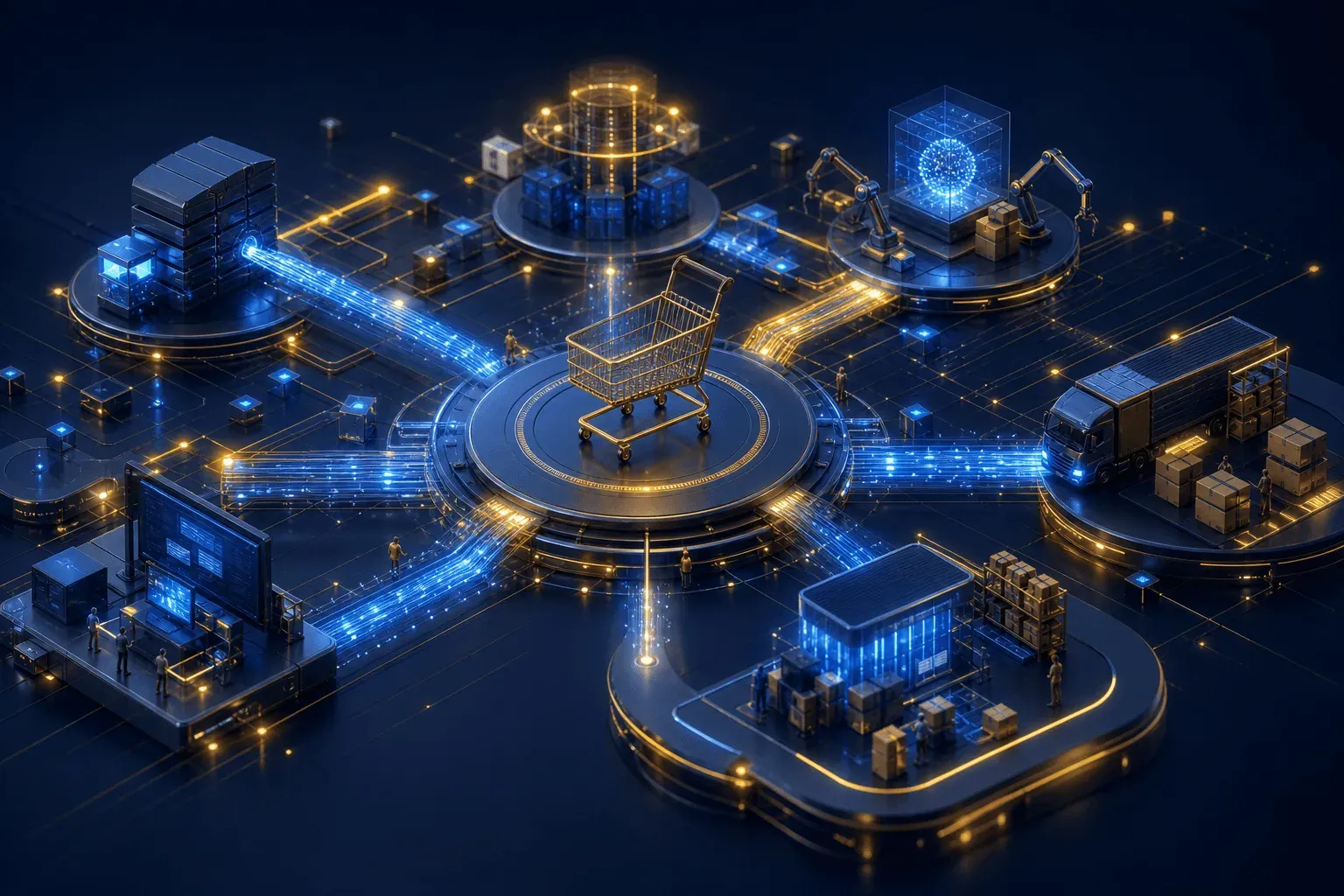
In the competitive landscape of 2026, the edge in eCommerce is no longer just about having a webshop—it's about how efficiently you operate it. Business Process Automation (BPA) is the engine that transforms manual labor into autonomous growth. For large-scale B2B and B2C enterprises, BPA is the primary tool for eliminating the "Manual Processing Tax" and scaling without a proportional increase in headcount. This deep dive explores the economics of manual friction, the pillars of an efficiency engine, and the path to operational autonomy.
I. The Economics of the Manual Processing Tax
Every manual step in your order-to-cash cycle is a "Manual Processing Tax" that erodes your margins. Whether it's manually verifying stock, correcting shipping addresses, or reconciling invoices, these frictions limit your ability to scale. In a typical mid-market B2B firm, the cost of manually processing a single order can range from $25 to $150. In contrast, an autonomous transaction costs cents.
According to research by McKinsey & Company, organizations that implement automation at scale can achieve a significant reduction in operational costs while improving service quality and speed. The shift from human-centric to system-centric processes is the foundation of the Autonomous Business. In 2026, scaling your business must be decoupled from scaling your payroll. If your administrative overhead grows linearly with your revenue, you are not scaling; you are merely growing more complex.
II. Building an Efficiency Engine: The Intelligence Layer
BPA in eCommerce is not just about simple integrations; it's about building an Intelligence Layer (utilizing tools like Zaproo.Flow) that orchestrates complex workflows across your Enterprise ERP, PIM, and storefront. This layer acts as the brain of the operation, making real-time decisions based on codified business rules.
Key Automation Domains:
Intelligent Order Routing: Automatically directing orders to the optimal warehouse based on real-time stock levels, geographical distance, and carrier SLAs. This ensures the fastest delivery at the lowest cost without human intervention.
Autonomous Inventory Orchestration: Real-time, bidirectional synchronization between Magento and your ERP, handling complex scenarios like reservations, partial shipments, and returns. This prevents the high-friction experience of overselling.
Orchestrated Returns (RMA): Automating the return process to ensure that financial credits and inventory updates are handled instantly. This transforms a cost center into a loyalty driver.
Supplier Data Normalization: Automatically ingesting and validating heterogeneous data feeds (CSV, XML, API) from multiple suppliers to keep your catalog fresh and accurate 24/7.
III. The ROI of BPA Implementation: Measurable Impact
Strategic implementation of BPA delivers measurable financial and operational returns. Based on our experience across 20+ Enterprise implementations, businesses achieving this level of autonomy see a 42% reduction in manual order entry costs within 6 months. This capital is then redirected toward strategic growth rather than operational maintenance.
Furthermore, by moving the control from human oversight to Technical Guardrails, businesses can reduce error rates from 3–5% (human average) to less than 0.1% (systemic validation). This ensures transactional integrity and builds long-term customer trust. In a market where prices are transparent, the reliability of your fulfillment process becomes your strongest competitive moat.
IV. Conclusion: Engineering for Autonomy
In 2026, BPA is the differentiator between a business that is "surviving" and one that is "scaling." By eliminating the Manual Processing Tax and building a self-sustaining efficiency engine, enterprises can finally achieve the operational agility that modern digital commerce demands. It is time to stop managing data and start orchestrating outcomes. Profitable growth is engineered through the autonomy of your business processes.
References & Bibliography
[1] McKinsey & Company (2023). Automation at Scale: The Next Frontier for Operational Excellence. (Analysis of how automation drives margin protection and speed). [2] Zaproo Internal Benchmark. Based on 20+ Enterprise ERP implementations and the transition to autonomous orchestration. [3] Gartner (2025). Top Strategic Technology Trends for 2026: Autonomous Business. [4] Google and Deloitte (2020). Milliseconds Make Millions. (The correlation between process efficiency, technical responsiveness, and conversion integrity). [5] Harvard Business Review (2024). The High Cost of Technical Debt and Manual Friction. (Analysis of how legacy processes hinder enterprise valuation).
One letter a month.
Engineering notes only.
Subscribe coming soon.