Headless Commerce: Everything You Need to Know in 2026
Why is headless commerce the future of eCommerce? Learn how API-first architecture and composable stacks make your business more flexible and faster. Zaproo expertise.
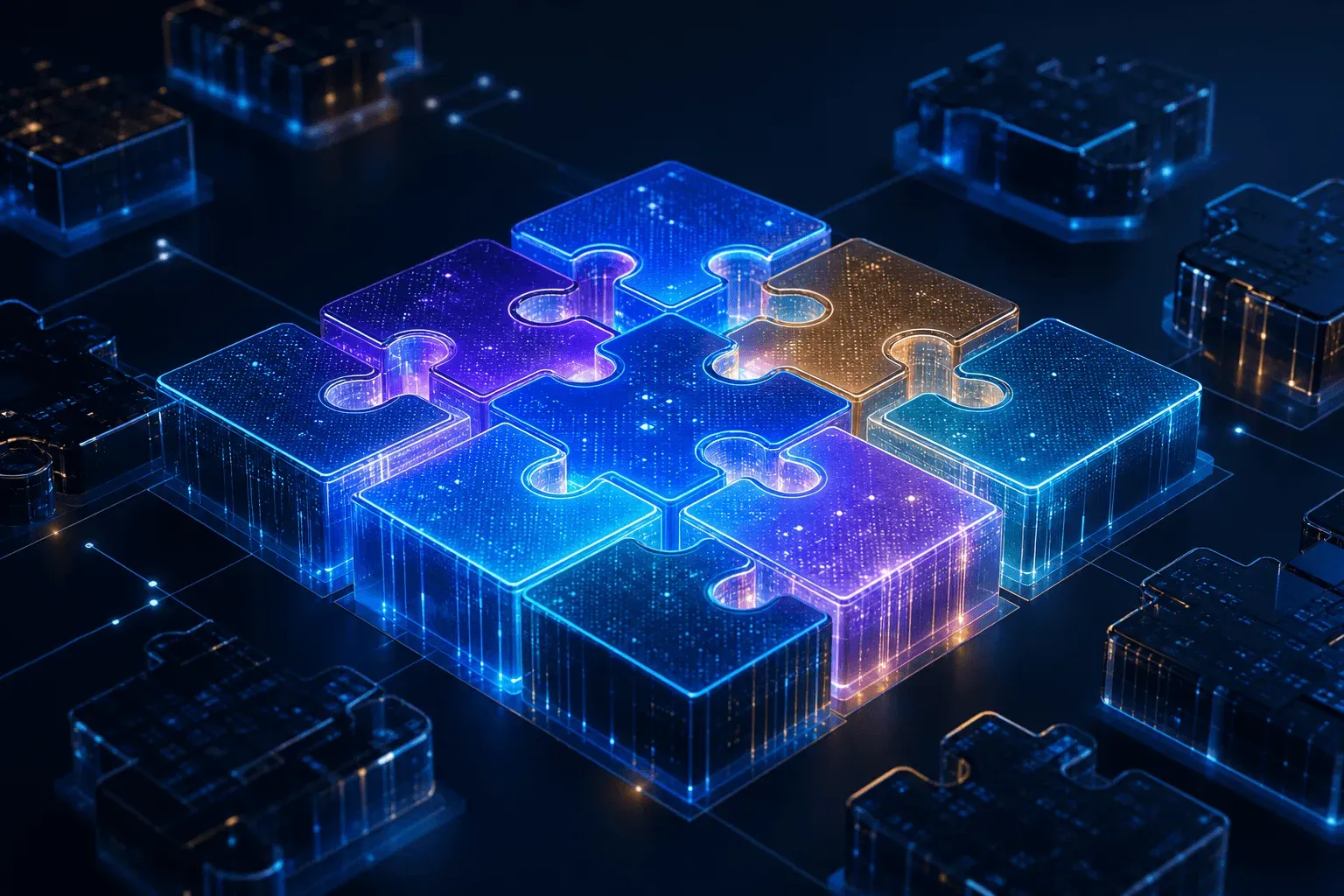
Headless commerce has moved from a niche architecture to a mainstream strategic choice in recent years, providing eCommerce businesses with greater flexibility, faster development cycles, and improved readiness for multi-channel sales. While a monolithic eCommerce platform tightly couples the user interface, business logic, and data layers, headless commerce decouples the frontend from the backend systems, allowing them to communicate via APIs. This separation enables faster innovation, superior integration capabilities, and a more flexible customer experience.
What is Headless Commerce?
At its simplest, headless commerce means that the "head" (the user interface) is disconnected from the "body" (the backend systems that manage products, pricing, orders, inventory, payments, and other business-critical processes). According to Forrester, commercetools, and other international frameworks, the core of this model is an API-first architecture: one or more frontend channels consume services from the same commerce engine, PIM, ERP, CMS, or OMS through standardized interfaces.
This means that the web, mobile apps, B2B portals, marketplace channels, or even voice assistants do not all have to run on the same template logic and frontend. They can use the same backend but present it to the customer entirely differently. Therefore, headless is not just a technical "rebuild" but a shift in how a company views its commerce as a collection of services rather than a single closed application.
Why Headless Commerce Has Become Essential
The rise of headless commerce is driven by three fundamental shifts: 1. Proliferation of Channels: Commerce no longer happens only in a single webshop; the same customer relationship moves across web, apps, social media, B2B portals, partner channels, and increasingly, agent-mediated experiences. 2. Development Speed: Companies want to change user experiences, campaigns, and content faster than a monolithic platform allows. 3. Integration Needs: There is an increasing need to integrate various systems—such as ERP, PIM, WMS, CMS, and personalization engines—without a single vendor controlling the entire stack.
McKinsey’s coverage of composable technologies supports this conclusion: companies are moving from single all-in-one platforms toward modular technology stacks because it allows for choosing the most suitable tool for each function and reduces dependency on a single platform. Headless is often the first step toward this greater architectural flexibility.
Headless, Composable, and MACH: Understanding the Differences
In practice, headless commerce is often confused with composable commerce and MACH architecture, although they do not mean exactly the same thing.
Headless Commerce in a narrow sense means the frontend is decoupled from the backend.
Composable Commerce means more broadly that the backend itself is divided into modular, API-connected capabilities such as search, checkout, pricing, content management, catalog, or loyalty.
MACH is an architectural principle whose four pillars are Microservices, API-first, Cloud-native, and Headless.
Thus, a company can have a headless e-shop without a fully composable stack. However, it is not possible to talk about mature composable commerce without the headless principle and a strong API layer. This distinction is important because many companies underestimate how much greater architectural discipline a truly modular commerce stack requires compared to just building a new frontend.
Where Headless Provides Real Business Value
Headless commerce does not create value simply because it is technically more modern. Value arises where a company has a real need for flexibility, speed, or multi-channel capability. For example, headless is well-suited for a company with multiple markets, multiple brands, a complex B2B and B2C combination, or a need to provide different customer experiences in different channels from the same backend infrastructure.
Headless is also a good fit when an existing monolithic platform hinders testing and development. If every design change, checkout experiment, or addition of a new channel requires a long release cycle, decoupling the frontend can be a direct competitive advantage. The central idea of commercetools and similar approaches is that flexibility is not an end in itself but a way to react faster to market changes, experiment, and grow conversion.
The Role of ERP, PIM, and Backend Systems
Headless commerce does not reduce the importance of ERP, PIM, or logistics systems; it makes their roles clearer. While a monolithic system tries to do everything within one platform, in a headless model, it must be very clearly defined which system owns which "truth."
ERP typically owns the price, financial, and inventory truth.
PIM is responsible for product info structure, attributes, descriptions, and channel-specific content.
OMS or WMS is responsible for order fulfillment and warehouse and logistics workflows.
This distinction is only strong if integrations are well-thought-out. If APIs simply move data back and forth without clear ownership and semantics, a situation quickly arises where the same product is different in different systems. Akeneo, Inriver, and other PIM-centric approaches emphasize that structured product data is the foundation of headless and composable commerce because, without it, different channels, frontends, and AI solutions cannot reliably use the same information.
The Connection to Customer Experience
Proponents of headless commerce often talk about architecture, but the final impact manifests in the customer experience. Headless allows for creating faster, cleaner, and channel-optimized user interfaces because the frontend does not have to follow the theme or rendering logic of a single platform. This can improve page speed, increase control over content and checkout, and simplify personalization.
Forrester’s digital experience coverage consistently emphasizes that customers do not reward a company for technology itself; they reward speed, simplicity, and relevance. Therefore, headless is only business-justified if it truly improves the experience: shorter load times, simpler purchase flows, better content, customized B2B portals, or a better-orchestrated multi-channel buying journey.
How AI and Agentic Commerce Change the Picture
Looking toward 2026, one cannot talk about headless commerce without AI and agentic commerce. As AI agents increasingly support product search, recommendations, purchase decisions, and even payments, an API-based architecture becomes even more valuable. Accenture, McKinsey, and others treat agentic commerce as the next step where commerce components no longer serve only humans but also software intermediaries.
Headless fits naturally into this logic because an agent does not need a monolithic storefront; it needs organized services, accessible product info, pricing logic, availability data, and checkout rules. Thus, headless is not just frontend freedom but also AI readiness. The better commerce functions are separated as APIs, the easier it is to use them via agents, automation, and new digital channels.
When Headless is Not the Right Choice
Headless is not suitable for every company. For a small or medium-complexity e-shop with a single channel, limited catalog, few integrations, and modest development capability, a monolithic platform may be perfectly sufficient. In such a case, headless may bring more complexity than value.
The biggest risk is that a company buys "freedom" but is not ready for the complexity that is its price. Headless usually means greater architectural responsibility, more integrations, clearer data ownership rules, stronger DevOps capability, and more mature release management. If these prerequisites are missing, the result can be slower, more expensive, and more fragile than a well-managed monolithic solution.
Key Mistakes to Avoid
The most common mistake is thinking that headless automatically means a better e-shop. In reality, headless only provides the opportunity to build a better experience but does not guarantee it. If the backend, data model, integrations, and content governance are disorganized, headless simply becomes an expensive way to rearrange the same problem.
The second major mistake is confusing technical flexibility with business priority. If a company does not know what problem it is solving—whether slow development, limited UX, multi-brand, B2B self-service, AI readiness, or integration rigidity—a headless project may dissolve into "modernization for the sake of modernization." McKinsey’s composable tech stack approach and Forrester’s experience-centric recommendations both indicate that an architectural decision must start from a business need, not technology fashion.
How to Decide if Headless is Right for You
The best way to decide is to evaluate four questions: 1. Do you have multiple channels, markets, or customer types that need different experiences? 2. Does the current platform hinder development speed, testing, or personalization? 3. Are your backend systems, such as ERP, PIM, and OMS, mature enough to function as an API-based back-office? 4. Is your organization ready to manage greater technical complexity and longer architectural responsibility?
If the answer to most of these questions is yes, then headless commerce is likely a justified strategic step. If the answer is mostly no, it is worth first organizing processes, data, and integrations and only then considering whether decoupling the frontend brings real business value.
References
McKinsey & Company. Transforming technology architecture with composable tech stacks. Link
Forrester. Digital Experience FAQ: Do I Need To Move To Headless Commerce? Link
commercetools. The Differences Between Composable, Headless and MACH®. Link
Contentful. Composable commerce migration. Link
Inriver. Complete guide to composable vs headless ecommerce. Link
Akeneo. PIM as a Keystone for Headless Commerce. Link
Inriver. Headless PIM: What it is and how it works. Link
Accenture. Agentic Commerce and the Future of Payments. Link


One letter a month.
Engineering notes only.
Subscribe coming soon.