The Strangler Fig Strategy
Modernizing Legacy B2B Infrastructure without the "Big Bang" Risk. An Architectural Deep Dive into Incremental Autonomy.

Modernizing Legacy B2B Infrastructure without the "Big Bang" Risk. An Architectural Deep Dive into Incremental Autonomy.
I. The Monolith Crisis in 2026
In the current landscape of B2B eCommerce, the greatest inhibitor to growth is not a lack of market demand, but the structural rigidity of legacy systems. Many organizations are trapped within monolithic Enterprise Resource Planning (ERP) systems and aging commerce platforms that were never designed for the sub-second, API-first requirements of the modern era.
The traditional approach to modernization—the "Big Bang" migration—has become a liability. Research from McKinsey indicates that over 70% of large-scale digital transformations fail to meet their original objectives, often due to the sheer complexity of replacing a core system in a single cut-over. The risk of data corruption, operational downtime, and lost revenue is simply too high for high-volume industrial and wholesale enterprises.
The Modernization Paradox: To remain competitive, you must innovate. To innovate, you must replace your legacy core. But replacing the core is the most dangerous activity a technical organization can undertake.
II. The Strangler Fig Pattern: A Technical Definition
The Strangler Fig Strategy, originally conceptualized by Martin Fowler, provides a safer alternative. Named after the Ficus aurea, which grows around a host tree and eventually replaces it, this architectural pattern involves building a new system around the edges of the old one.
In the context of B2B eCommerce, this means intercepting requests at the edge and routing them either to the legacy monolith or to new, autonomous microservices. Over time, more functionality is migrated to the new architecture until the legacy system can be safely decommissioned.
The Three Pillars of Strangler Fig Implementation:
Interception: Using a proxy or API Gateway to redirect traffic based on specific routes or functional domains.
Coexistence: Ensuring that the new and old systems can share data (often via an orchestration layer like Zaproo.Flow) without creating race conditions.
Elimination: The systematic removal of legacy modules once the new services have proven their stability in production.
III. Architecting the Intelligence Layer
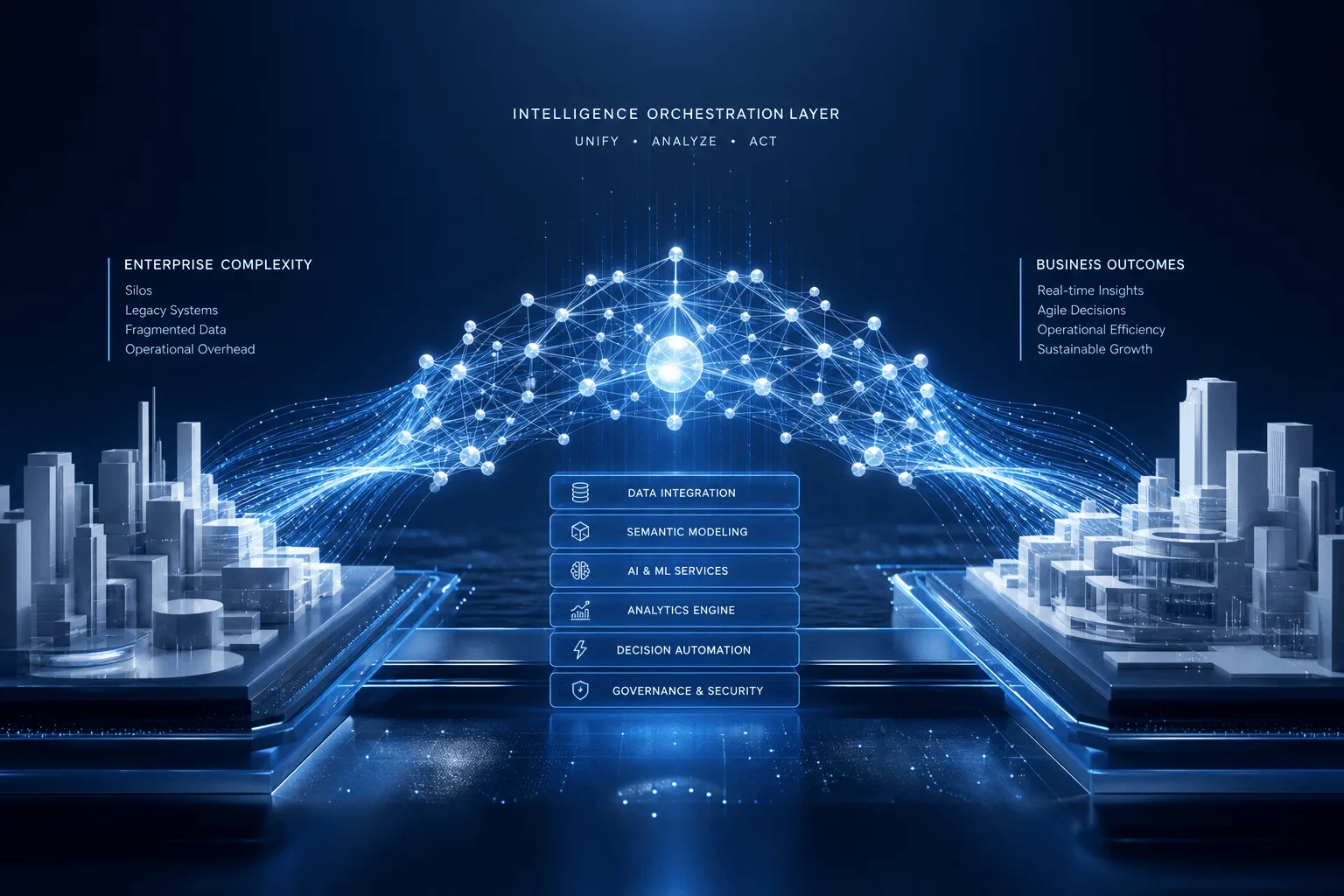
The key to a successful Strangler Fig migration is the Intelligence Layer. This is not a simple integration; it is an orchestration engine that manages the state across the hybrid environment. While the legacy ERP might still handle financial records, the new Intelligence Layer handles real-time stock allocation, complex B2B pricing logic, and AI-driven customer interactions.
By decoupling the storefront from the admin-keskkonna (backend) (Headless Architecture), organizations can modernize the customer experience immediately while the backend migration continues in the background. This eliminates the "Manual Processing Tax" by automating the data translation between the modern frontend and the legacy backend.
IV. Risk Mitigation and Data Integrity
One of the primary challenges in incremental migration is maintaining a "Single Source of Truth." Engineering practice across 15+ Enterprise ERP integrations has shown that Semantic Mismatch is the most common cause of failure. This occurs when the new system interprets data (e.g., Units of Measure or Tax Codes) differently than the legacy system.
To mitigate this, we implement a Synchronization Ledger within the orchestration layer. This ledger tracks every transaction in real-time, ensuring that if a change occurs in the legacy ERP, it is instantly reflected in the modern storefront, and vice versa.
|
Feature |
Big Bang Migration |
Strangler Fig Strategy |
|---|---|---|
|
Risk Profile |
High (All-or-nothing) |
Low (Incremental) |
|
Time to Value |
12-24 Months |
3-6 Months (First Phase) |
|
Operational Impact |
High (Potential Downtime) |
Zero (Seamless Transition) |
|
Cost Structure |
Massive CapEx |
Manageable OpEx |
V. Conclusion: The Roadmap to Autonomy
The Strangler Fig Strategy is more than a technical pattern; it is a strategic framework for the Autonomy Era. It allows B2B enterprises to escape the gravity of legacy debt without risking their current operations. By focusing on incremental wins and building a robust Intelligence Layer, organizations can achieve 80% autonomy in their routine processes within a fraction of the time required for a traditional migration.
References & Bibliography
[1] MACH Alliance, "The State of Composable Architecture 2025," 2025.
[2] McKinsey & Company, "The Digital Transformation Report: Why Transformations Fail," 2024.
[3] Fowler, M., "StranglerFigApplication," martinfowler.com, 2004 (Updated 2024).
[4] Gartner, "Strategic Technology Trends for 2026: The Rise of Autonomous Orchestration," 2025.
[5] Forrester Research, "The ROI of Headless Commerce in B2B," 2025.
[6] Zaproo Engineering, "Internal Benchmark: 42% OpEx Reduction via Incremental Modernization," 2026.


One letter a month.
Engineering notes only.
Subscribe coming soon.