eCommerce Integrations: ERP, PIM & Logistics Automation 2026
eCommerce integrations with ERP, PIM, and logistics systems are the backbone of scalable commerce. Learn how to build an orchestrated whole that ensures data integrity and enables autonomous growth.
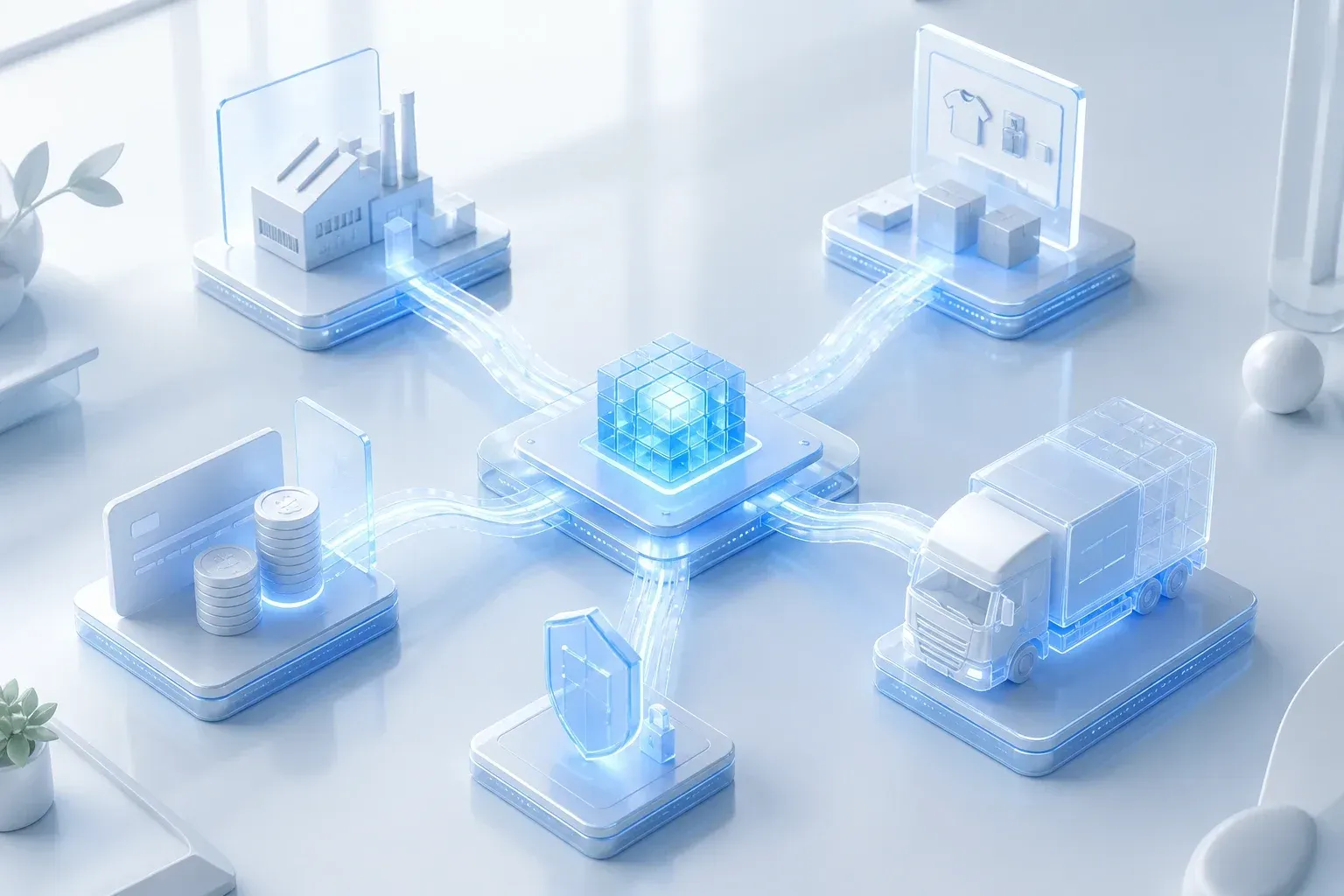
eCommerce integrations with ERP, PIM, and logistics systems are no longer a "technical detail" but the foundation upon which scalable and profitable eCommerce can be built. McKinsey, IBM, and Accenture emphasize that successful eCommerce is primarily an operating model: the e-shop, back-office systems, and logistics must function as one orchestrated whole, not as separate "boxes."
Why Integrations are Critical
In McKinsey's NeXT Commerce view, eCommerce growth and profitability are directly linked to how well technology, data, and operations are aligned. If the e-shop works separately, ERP separately, PIM separately, and logistics separately, a "directionless tech stack" is created—a bunch of systems that do not support a common business logic. IBM describes eCommerce automation as the use of technology and AI to streamline repetitive workflows; without proper integrations, these workflows cannot be reliably automated.
The Role of ERP Integration
ERP (Enterprise Resource Planning) is the "truth" about price, stock quantities, invoice flows, and financial processes. IBM points out that typical automated eCommerce processes are inventory management, order fulfillment, and order tracking—all of which depend on the e-shop and ERP exchanging data in real-time or based on specific logic.
A good ERP integration means:
Stock levels and availability are synchronized in real-time or at scheduled intervals, avoiding over- and under-ordering.
Pricing rules (contract prices, campaigns, discounts) come from one source, not multiple Excels.
Orders move automatically from the e-shop to the ERP and back: status, invoices, credit limits, fraud checks.
Thus, the ERP becomes not an obstacle but a background engine that enables the automation of sales and logistics tasks.
PIM and Product Information Orchestration
PIM (Product Information Management) is the central source for product data: names, descriptions, attributes, media, and channel-specific variations. McKinsey emphasizes that multi-channel and multi-market eCommerce requires consistent product information; otherwise, different channels will start showing a different "truth" about the same product.
PIM integration with the e-shop:
Ensures that product info is entered once and used in multiple channels (e-shop, marketplace, B2B portal).
Simplifies attribute-based filters, recommendation engines, and AI personalization because data is structured.
Reduces manually managed "Excel catalogs" and thereby the risk of errors, which is the biggest enemy of automation.
Semantic integrity—a unified product ID and a consistent unit of measure through PIM, ERP, and logistics—is a prerequisite for automation not to start spreading incorrect info.
Logistics and the "Last Mile"
The eCommerce logistics flow includes warehouse selection, packing, shipping, tracking, and returns. McKinsey's logistics approach shows that it is precisely the "last mile" and the return process that distinguish scalable companies from those whose operations start to fall apart at high volumes. IBM describes how automation helps make the movement of order info to the warehouse, transport partner APIs, and customer notifications smooth and error-free.
Logistics integration means:
Automatic shipment creation and label generation directly from the e-shop order.
Status updates in the e-shop and customer communication (shipped, in transit, delivered, return in progress).
Linking return and exchange flows with inventory and financial processes so as not to "lose" goods or money.
When logistics info flows through integrations, automated notifications and AI agents can actually rely on real data.
Semantic Integrity: Same Product, Same Truth
McKinsey warns against fragmented systems where the same product is defined differently in different systems: ERP sees the product at the "pallet" level, PIM as an individual piece, logistics as a "package." The result is a semantic conflict that manifests in the e-shop as the wrong quantity, wrong price, or wrong delivery capability.
An integration strategy must deal with concepts in addition to APIs:
Which system owns the price truth and at what point it changes over time.
Which system owns the inventory truth (ERP vs. WMS vs. 3PL).
How to keep one product ID and a single unit of measure through the entire tech stack, including PIM, ERP, logistics, and analytics.
When semantics are in place, integration truly becomes a "digital backbone," not just cables between systems.
The Next Layer of AI and Automation
Accenture describes how AI and automation can increase productivity by up to 30% and reduce indirect costs, but emphasizes at the same time that this requires an integrated commerce ecosystem. An AI agent or workflow cannot make a "smart decision" if price, inventory, or delivery data is inaccurate or delayed.
AI-based automation in an e-shop can include:
Dynamic inventory provisioning: demand forecasting, shipping optimization, inventory balancing.
Personalized offers that consider availability, margin, and customer value, not just browsing history.
Smart service where AI directs tickets based on complexity to the right service flow and escalates at the right moment.
This layer only works when ERP, PIM, and logistics are telling the "same story."
Typical Mistakes in Integrations
Top sources warn of several typical mistakes:
Too many point-to-point connections. McKinsey describes how a random integration sprawl eventually leads to complexity that is hard to manage and scale—every new connection creates new "technical debt."
Confusing "process first, integration later." IBM and Forrester emphasize that business processes must be clearly mapped before technical connection—otherwise, a bad process is automated to be faster.
Lack of governance. Accenture and Gartner's approaches to AI, automation, and BPA show that without clear responsibility, rules, and metrics, the integration stack becomes a "black box" that no one masters.
The result: systems do "talk" to each other, but no one knows exactly what they are saying and at what point they might make a wrong decision.
How to Build an Integration Strategy
International reports recommend approaching integrations step-by-step, not "all at once":
Start with the core: ERP + PIM + e-shop, so that product and inventory truth is in one place and consistent.
Add logistics and payment solutions, so that the order journey is digitized from start to finish.
Build a clear integration layer (middleware, iPaaS, API gateway), not just direct point-to-point connections.
Define "master data" and owners: who owns the truth of price, inventory, customer segments, and product catalog.
This approach creates a foundation upon which AI agents, personalization, and more complex business logic can be safely built without every new function breaking the stack.
References & Bibliography
McKinsey & Company. NeXT Commerce Operations. Link
McKinsey & Company. NeXT Commerce: Future of e-Commerce. Link
McKinsey & Company. What is e-commerce? Link
IBM. What is e-commerce automation? Link
IBM. AI in commerce: Essential use cases for B2B and B2C. Link
Accenture. Elevate Your Commerce Strategy to Unlock AI-powered Growth. Link
Accenture. Agentic Commerce and the Future of Payments. Link
Forrester / Google. Digital Buying Experiences Win Business. Link
Gartner / Kissflow. Gartner Magic Quadrant for Workflow Automation in 2026. Link
Automake. A Comprehensive Guide to Gartner's Business Process Automation Tools. Link