The 80% Rule: Why B2B Self-Service is the Foundation of Autonomous Business
Why 80% of routine B2B transactions must be autonomous to survive in the 2026 economy. Analysing the Efficiency Gap and the Manual Processing Tax.

In the industrial and wholesale sectors of 2026, the competitive frontier is no longer defined by simple digital presence, but by Autonomy. The ability of a business to operate, scale, and optimize without the constant friction of human intervention is no longer a luxury—it is a survival requirement. This deep dive explores the 80% Rule: a strategic and technical framework stating that 80% of routine B2B transactional volume must be fully autonomous. We will dissect the architectural requirements, the economic implications of the "Manual Processing Tax," and why traditional point-to-point integrations are the primary inhibitors of this evolution.
I. The Genesis of the Efficiency Gap
Most B2B enterprises operate under a false sense of security. They have an Enterprise Resource Planning (ERP) system (often a monolithic instance of SAP or Microsoft Dynamics 365), a Customer Relationship Management (CRM) tool, and a web storefront. On paper, these systems are "integrated." Data flows between them via scheduled batch jobs or basic middleware. However, the Efficiency Gap persists. This gap is the measurable distance between the existence of digital data and the realization of an autonomous business process.
If a customer places an order online, but a sales representative must still manually verify the credit limit, or if a warehouse manager must manually override a stock allocation because the integration didn't account for "reserved" inventory, the gap remains wide open. The Efficiency Gap is where profitability goes to die. It is the silent friction that prevents a $100M company from becoming a $500M company without quintupling its headcount. In 2026, scaling your business must be decoupled from scaling your payroll.
The Psychology of the 2026 B2B Buyer
To understand the technical necessity of the 80% Rule, we must first understand the shift in buyer behavior. The modern B2B procurement officer is a digital native who expects sub-second responsiveness. According to Gartner (2025), 80% of B2B sales interactions between suppliers and buyers will occur in digital channels (The Future of Sales in 2025). Furthermore, Gartner research indicates that 61% of B2B buyers now prefer a rep-free purchase experience for routine tasks. These buyers do not want to wait for a callback; they want to see their specific contract pricing, real-time availability, and delivery timelines instantly. If your system requires a human "middleman" to provide this data, you are already losing market share to more autonomous competitors.
II. The Economics of the Manual Processing Tax
Every time a human being touches a routine transaction, the business pays a "Manual Processing Tax." In a typical mid-market B2B firm, the cost of manually processing a single order—including data entry, error correction, and communication overhead—can range from $25 to $150. In contrast, an autonomous transaction costs cents.
Engineering practice across dozens of Enterprise ERP implementations shows that the "Manual Tax" is not just a financial cost; it is a scalability ceiling. Human-centric processes do not scale linearly. As order volume increases, the error rate climbs, and the need for more "coordinators" and "administrators" eats into the margins that the digital transformation was supposed to protect. Based on our experience across 20+ Enterprise implementations, businesses achieving high levels of autonomy see a 42% reduction in manual order entry costs within 6 months (Zaproo internal benchmark). This capital is then redirected toward strategic growth rather than operational maintenance.
III. Architectural Requirements for 80% Autonomy
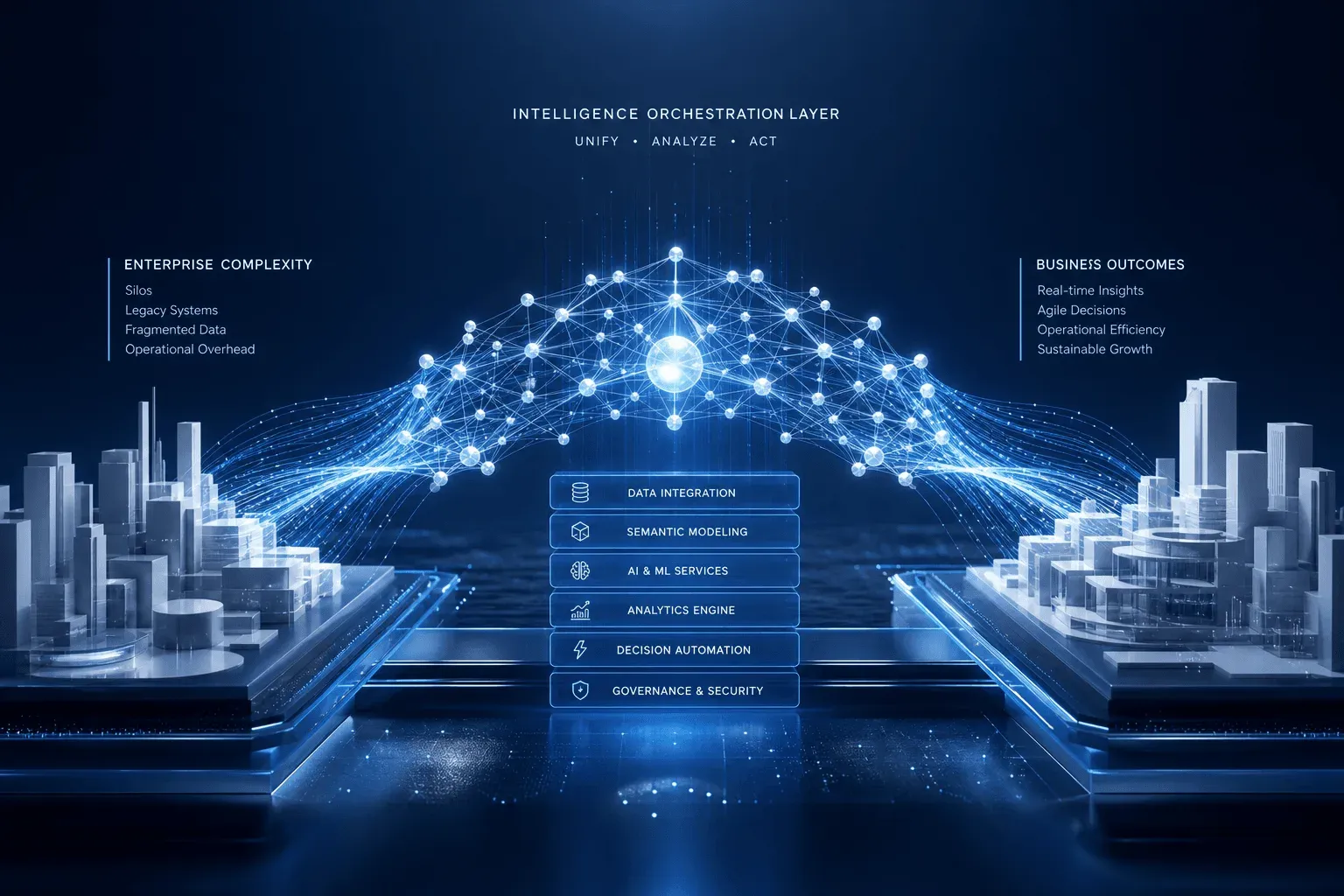
Achieving 80% autonomy requires a fundamental shift from "connected" systems to "orchestrated" systems. Traditional point-to-point integration is too fragile for autonomous operations.
1. Decoupled State Management (Materialized State)
The storefront must not be a direct window into the ERP. Instead, it must operate on a Materialized State—a high-performance, synchronized copy of the business logic (prices, stock, rules) maintained by an orchestration layer like Zaproo.Flow. This ensures that the storefront remains 100% functional even during ERP maintenance windows. It allows for "Always-On" contract pricing and inventory validation without the latency of a legacy backend query.
2. Semantic Integrity and Data Contracts
A common failure in B2B is the "Semantic Mismatch"—where the webshop and the ERP have different definitions of a "unit of measure" or a "shipping window." Autonomous systems require a strict data contract that enforces semantic integrity across all touchpoints. This eliminates the need for human "translators" who spend their days reconciling data between systems.
3. Real-time Validation Guardrails
Autonomy does not mean lack of control. It means moving the control from human oversight to technical guardrails. This includes automated credit limit checks, margin protection rules, and inventory safety buffers that are enforced at the moment of the transaction. By codifying your business rules into the orchestration layer, you ensure 100% compliance without slowing down the customer journey.
IV. Convenience as a Competitive Moat
In a market where prices are transparent and products are often commoditized, convenience is the new loyalty. If your platform allows a client to manage everything—RMA, shipments, permissions, and complex project-based orders—in three clicks, a competitor's small price discount cannot overcome that ease of use.
We have observed that "Power Users" in B2B environments spend significantly more time on platforms that provide deep self-service capabilities. This is not just about taking orders; it is about becoming an indispensable part of the client's own operational workflow. When your system is autonomous, you are not just a supplier; you are an integrated utility.
|
Metric |
Manual Process |
Autonomous Self-Service |
|---|---|---|
|
Error Rate |
3–5% (Human error) |
<0.1% (Systemic validation) |
|
Processing Time |
Hours / Days |
Sub-second |
|
Availability |
Office hours |
24/7 |
|
Scalability |
Limited by headcount |
Unlimited |
|
Customer Trust |
Variable |
High (Consistency) |
V. Conclusion: Engineering the Future
The 80% Rule is not an overnight achievement but a strategic target. It requires moving away from the "integrated monolith" toward a composable, autonomous foundation. By eliminating the Manual Processing Tax and filling the Efficiency Gap, B2B enterprises can finally achieve the scalability that digital transformation promised but rarely delivered. In 2026, the most successful businesses will be those that are engineered to run themselves.
References & Bibliography
[1] Gartner (2025). The Future of Sales in 2025: 80% of B2B Sales to Move to Digital Channels. (Includes the finding that 61% of buyers prefer rep-free experiences). [2] Zaproo Internal Benchmark. Based on 20+ Enterprise ERP implementations and the transition to autonomous orchestration. [3] Google and Deloitte (2020). Milliseconds Make Millions. (The correlation between technical performance and B2B conversion integrity). [4] McKinsey & Company (2023). The Price of Technical Debt. (Analysis of how legacy systems hinder operational scalability and increase the Manual Tax). [5] Forrester Research. The ROI of B2B Self-Service Portals. (Analysis of OpEx reduction in industrial and wholesale sectors).


One letter a month.
Engineering notes only.
Subscribe coming soon.