The ERP Efficiency Gap: Why Integration is No Longer Enough for B2B Growth
The Efficiency Gap is the silent killer of B2B growth. Learn why simple ERP integration is no longer enough and how to transition to an Autonomous eCommerce model to eliminate the 'Manual Processing Tax'.

In the B2B sector of 2026, "integration" has become a baseline requirement. Most enterprises have successfully connected their storefronts to their Enterprise ERP systems. However, a new challenge has emerged: the Efficiency Gap. This is the measurable distance between having digital data and having an autonomous business process. While your systems may be "talking," the question is: are they deciding?
I. The Illusion of Connectivity
Most B2B organizations operate under the illusion that because their systems are "connected," they are efficient. In reality, traditional point-to-point integrations often create a "Distributed Monolith." Data moves between systems, but the logic remains siloed, requiring constant human oversight to handle exceptions, validate pricing, or manage inventory discrepancies. This connectivity without autonomy is a primary inhibitor of growth.
According to Gartner (2025), by 2026, over 70% of large and mid-sized organizations will include "composability" as a key criterion when evaluating new technology (Predicts 2026: Cyber Resilience). This shift is driven by the realization that monolithic, tightly coupled integrations are too fragile for the rapid pivots required in the modern economy. A resilient business requires components that are not just connected, but interchangeable and autonomous.
II. The Cost of the Manual Processing Tax
When your systems are integrated but not autonomous, your business pays a "Manual Processing Tax." This tax is paid every time a sales representative manually verifies a stock level, a coordinator corrects an order entry error, or a finance officer manually reconciles an invoice because the integration failed to account for a specific edge case.
In a typical mid-market B2B firm, the cost of manually processing a single order can range from $25 to $150. This is not just a financial drain; it is a scalability ceiling. Human-centric processes do not scale linearly. As order volume increases, the friction of manual oversight eats into the very margins that digital transformation was intended to protect. Research indicates that sales teams in non-autonomous environments spend up to 60% of their time on administrative tasks rather than strategic selling.
III. Bridging the Gap with Autonomous Orchestration
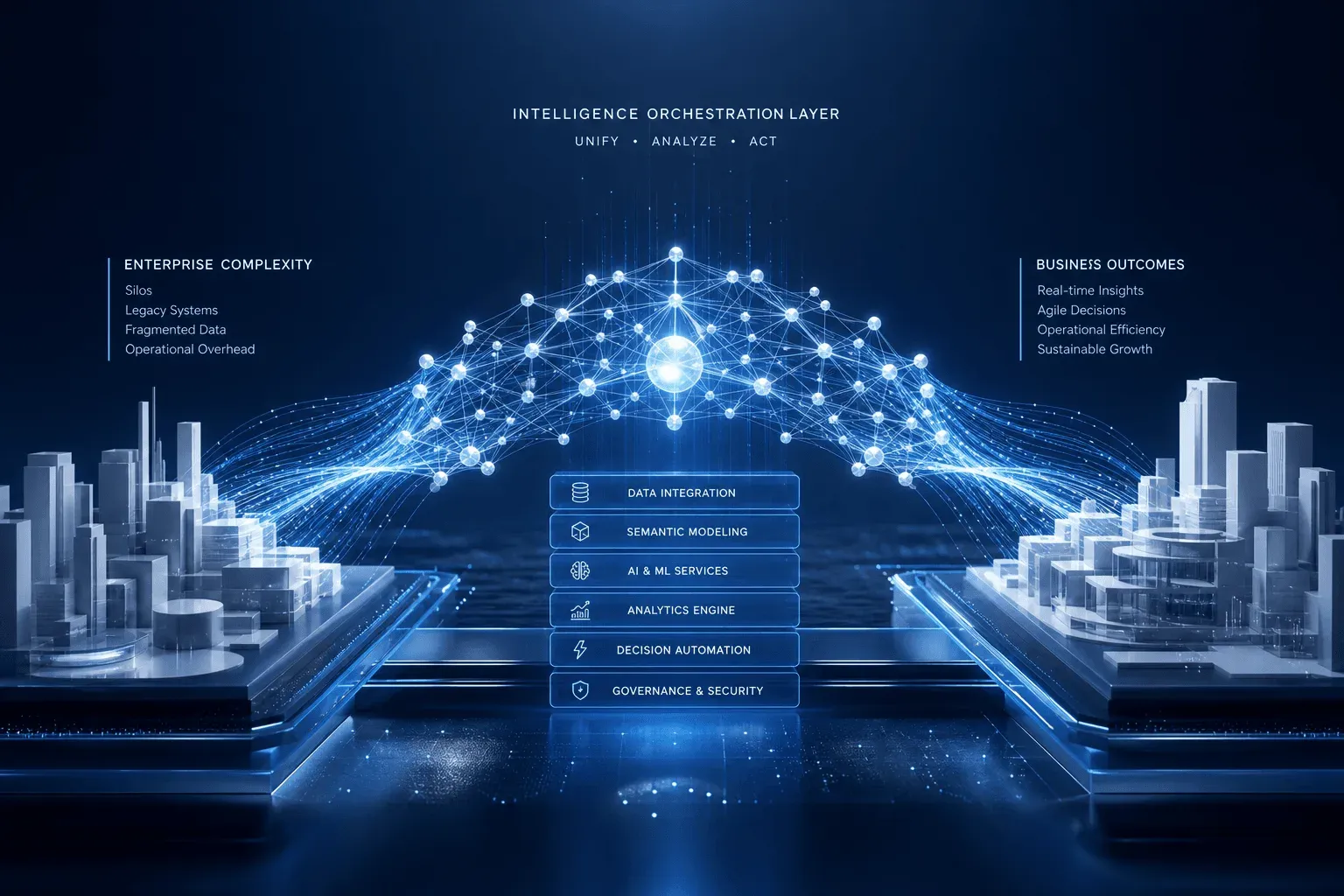
To close the Efficiency Gap, B2B leaders are moving toward Autonomous Orchestration. This involves building an "Intelligence Layer" (utilizing tools like Zaproo.Flow) that sits above the ERP and the storefront. This layer acts as the brain of the operation, making real-time decisions based on codified business rules.
1. Materialized State Autonomy
Instead of the storefront making real-time, synchronous calls to a potentially slow or busy ERP, it operates on a Materialized State. This is a high-performance, synchronized copy of the business logic—contract prices, inventory levels with safety buffers, and customer rules. This ensures the business is "Always-On," even during ERP maintenance windows or network disruptions.
2. Semantic Integrity and Data Contracts
A common failure point is the "Semantic Mismatch," where different systems have different definitions of data entities (e.g., "available stock" vs. "physical stock"). Orchestration enforces a strict data contract, ensuring that an order placed in the storefront is semantically identical to the record created in the ERP, eliminating the need for manual reconciliation or "data cleaning" by staff.
3. Technical Guardrails over Human Oversight
Autonomy is maintained through technical guardrails rather than human oversight. Automated credit limit checks, margin protection rules, and inventory validation are enforced at the moment of the transaction. By moving the "brain" of the transaction to the orchestration layer, you ensure 100% integrity without manual intervention.
IV. The ROI of Autonomy: Measurable Impact
Strategic analysis of B2B enterprises moving toward this model shows significant returns. Based on our experience across 20+ Enterprise implementations, businesses achieving this level of autonomy see a 42% reduction in manual order entry costs within 6 months (Zaproo internal benchmark). Furthermore, industry studies suggest that moving to a composable, autonomous architecture can reduce the long-term Total Cost of Ownership (TCO) by up to 30% over three years.
|
Stage |
Integration (Baseline) |
Orchestration (Autonomous) |
|---|---|---|
|
Data Flow |
Point-to-Point / Batch |
Event-Driven / Real-time |
|
Validation |
Manual Oversight |
Technical Guardrails |
|
Scalability |
Linear (Headcount dependent) |
Exponential (Autonomous) |
|
Availability |
Dependent on ERP uptime |
99.99% (Always-On) |
|
Tech Stack |
Monolithic |
Composable (Nuxt 3) |
V. Conclusion: Beyond the Integration Baseline
In 2026, integration is no longer enough. To achieve true scalability and protect margins, B2B enterprises must bridge the Efficiency Gap. By moving toward a composable, autonomous foundation, leaders can transform their technology from a cost center into a strategic growth engine. The goal is not just to have systems that talk, but to have an enterprise that thinks and acts for itself.
References & Bibliography
[1] Gartner (2025). Predicts 2026: Cybersecurity Program Rebrands to Cyber Resilience. (Includes the finding that 70% of orgs prioritize composability). [2] Zaproo Internal Benchmark. Based on 20+ Enterprise ERP implementations and the transition to autonomous orchestration. [3] Google and Deloitte (2020). Milliseconds Make Millions. (Analysis of technical performance impact on B2B conversion). [4] McKinsey & Company (2022). Resilience for sustainable, inclusive growth. (Analysis of how architectural agility drives shareholder return). [5] Forrester Research. The Total Economic Impact of Composable Commerce. (Analysis of TCO reduction in enterprise environments).


One letter a month.
Engineering notes only.
Subscribe coming soon.